True, the produce aisle is home to some of the most nutritious food in the supermarket. Fruits and vegetables are packed with vitamins, minerals, and fiber, and are key to help keep your gut healthy and immune system strong. But by their very nature as plants (that are often grown outside) and the fact that they’re usually transported and stocked without packaging, fruits and vegetables have the potential to be vehicles for a small amount of bacteria, fungi, microbes, or other chemicals, according to the USDA. For this reason, it’s important to wash produce before consuming it.
To help coach you through how to do just that, we’ve tapped our Test Kitchen to chime in about when and how to wash everything from apples and bananas (yes, even though you don’t eat the peel!) to berries and, of course, lettuce. But what about lettuce, spinach, romaine, or spring mix that’s labeled as “pre-washed”?
Perhaps you invested in a bag of butterhead leaves to feature on a trendy salad board or stocked up on a package of greens to toss into a Bacon, Potato, and Kale Frittata. Regardless of which greens you snagged or what their final destination might be, it can be confusing to know whether you should wash pre-washed bagged salad or not. We turned to the pros for your final answer, and actually discovered a surprising reason why washing might actually be the riskier choice in this instance.
- Meredith Carothers, food safety specialist for the USDA’s Food Safety and Inspection Service in Washington D.C.
- Sarah Brekke, M.S., Better Homes & Gardens Test Kitchen brand manager
What Does Pre-Washed Mean?
Greens sold in sealed bags that are labeled “washed,” “ready-to-eat,” or “triple-washed” are prepared in a facility that must adhere to the FDA’s Good Manufacturing Practices and a Food Safety Plan. The leaves inside each bag with these label claims has gone through three steps to help ensure that there are no foreign objects or contaminants:
- The greens are “pre-washed” with cool water at the farm, which helps eliminate dirt, debris, grit, insects, and rocks
- The leaves then take two separate baths at the processing site, a process that sometimes includes a low-level of food grade sanitizer that removes about 99% of harmful bacteria
- The greens are dried and packaged to be sold
Essentially, pre-washed greens are rinsed and go through an industrial-scaled salad spinner, of sorts, before being packaged and transported to your grocery store.
Test Kitchen Tip: Notice that we said “food grade sanitizer” as part of the procedure for bringing pre-washed greens to market. This has undergone testing to be proven to be safe. As a reminder, any time you’re washing produce at home, never use household sanitizer, soap, or bleach to clean produce, and save your money on products marketed as “fruit and vegetable wash.” Stick to water or water mixed with baking soda or vinegar (depending on the produce item) when you’re washing fruits and veggies yourself.
This industrial process removes far more bacteria than we ever could at home, however, there is still a small risk for the reintroduction of foodborne illness-triggering germs like salmonella, listeria, or E. coli, hence the food recalls every so often. This could occur after washing but before the bags are sealed, or at any point if a bagged salad happens to have a rip or hole.
Don’t let this scare you off from eating bagged salad, though. The number of foodborne illnesses triggered by pre-washed salad is quite low; far less than the number of infections caused by something like consuming raw eggs.
Should You Wash Pre-Washed Greens?
All that being said, you might be wondering, “should I wash bagged salad?” Our experts agree: No, it’s not necessary to wash pre-washed greens. In fact, you might be increasing your risk for foodborne illness if you do.
Bagged produce items that declare “washed,” “triple-washed,” “pre-washed” or “ready-to-eat” are just that, confirms Meredith Carothers, food safety specialist for the USDA’s Food Safety and Inspection Service in Washington D.C.. Unless the label specifies that washing is required, enjoy them straight from the package, Brekke and Carothers agree.
“Pre-washed greens are 100% safe to eat straight from the container. Actually, washing them again can cause more harm than good, because you run a greater risk of cross-contamination due to a contaminated sink or dirty water,” says Sarah Brekke, M.S., Better Homes & Gardens Test Kitchen brand manager.
Always store your lettuce in the refrigerator, and remember to wash your hands for 20 seconds with soap and warm water before handling your pre-cleaned greens or any foods. Take a peek at your bag to inspect for any spoilage or tears in the bag, and if all looks good, you have the green light to proceed.
But what about that potential remaining 1% of bacteria that the pre-washing couldn’t eliminate, or the potential contamination after the fact? There will always be a small risk to eating raw fruits and vegetables, including ready-to-eat greens. Still, washing again is unlikely to remove the bacteria at this point, which can be trapped below the surface of the leaves. Plus, your sink, cutting board, or hands are very likely to be dirtier than the greens themselves. (This would especially be true if you’ve recently handled raw poultry, meat, or eggs and haven’t scrubbed your hands with soap or sanitized the surfaces.) The potential benefits outweigh the risks, so save your time.
“If you do choose to wash produce marked as ‘pre-washed’ or ‘ready-to-eat,’ make sure that it does not come in contact with unclean surfaces, utensils, or hands. This will help to avoid cross contamination,” Carothers says.
When and How to Wash Leafy Greens
This primer has been all about pre-washed greens. Any other leafy greens that are sold loose or in packages that specify “wash before eating,” it’s vital to clean your veggies. The best time to wash leafy greens is right before you plan to use them, as any moisture can speed up spoilage, Brekke notes.
Start by discarding any wilted outer leaves, then proceed accordingly based on your chosen variety:
- Leafy lettuces: Remove and compost or discard the root end. Separate the leaves, then rinse them under running water to remove any dirt or debris.
- Smaller, tender greens: Fill a bowl two-thirds of the way to the top with water, then use clean hands to swirl the leaves around the bowl. Remove the leaves, shaking gently to allow any debris to land in the bowl.
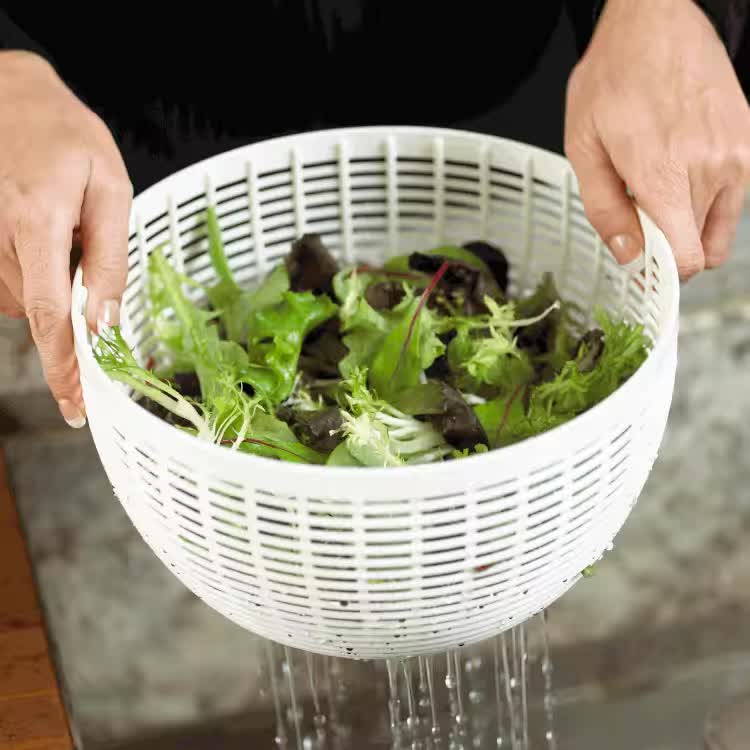
Allow your greens to drain in a colander then pat dry with a clean kitchen towel or paper towels, or run them through a salad spinner to twirl off excess moisture.