Besides where and how to store fresh fruits and vegetables and the best temperature to cook every kind of meat, one of the most common questions we receive from readers relates to the wide array of oils available. Supermarket shelves lined with bottle after bottle are just one piece of evidence that this is one big, fat topic. How are we supposed to know which oil to use for what purpose?
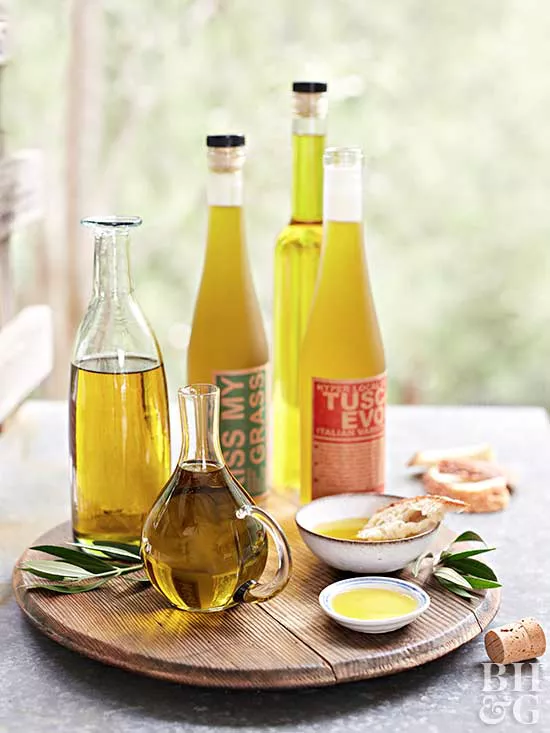
Olive oil gets a lot of love, and it’s well-deserved. It’s flavorful, versatile, and due to the fact that it contains more monounsaturated fat than any other plant oil, EVOO is one of the most heart-healthy ingredients available. In fact, a cohort of scientists gathered in 2018 to review related research and said, “substantial evidence is accruing to support the widespread opinion that extra virgin olive oil should, indeed, be the fat of choice when it comes to human health and sustainable agronomy.”
But olive oil is far from your only option, and sometimes we run out—or are seeking a more budget-friendly and neutral-flavored oil. Two of the most popular and widely-available options include corn oil and vegetable oil. To help you determine which neutral plant oil might be best to stock among your pantry staples, we strolled over to the Test Kitchen to ask, “corn oil vs. vegetable oil: which is better?”
- Sarah Brekke, M.S., Better Homes & Gardens Test Kitchen brand manager
What Is Corn Oil?
“Corn oil is a golden yellow-colored oil with a neutral flavor and aroma,” explains Sarah Brekke, M.S., Better Homes & Gardens Test Kitchen brand manager. Similar to many other plant oils, “its consistency is liquid at room temperature.”
Corn oil has a high smoke point of around 450°F, making it ideal for frying, sautéing, grilling, or featuring in baked goods that might benefit from a hint of very faint roasty corn flavor.
Test Kitchen Tip: The smoke point is the temperature at which a cooking fat begins to smoke, oxidize, and begin to decompose. It is best to use all fats and oils at levels lower than their smoke points to steer clear of that smoke—as well as any burnt flavors or smells.
But what is corn oil, exactly? You could probably intuit it by the name: It’s oil extracted from kernels of corn. Since corn is only about 4% fat, it takes quite a bit of work—and quite a bit of corn—to make the oil. The kernels are mechanically pressed to extract the oil, then that oil undergoes a series of chemical treatments to remove impurities and any unwelcome aromas or flavors. This extraction process eliminates many of the vitamins and minerals in the corn, however, corn oil still contains some vitamin E, a cancer-fighting antioxidant.
According to the USDA’s FoodData nutrition database, 1 tablespoon of corn oil contains 122 calories, 14 grams of fat, and 13% of your recommended daily value of vitamin E.
Those 14 grams of fat are in a 46:1 ratio of omega-6 fatty acids to omega-3 fatty acids. (Both omega-3s and omega-6s are essential, meaning we can only obtain them from our diet and can’t produce them internally.) In the past, humans consumed about a 1:1 ratio of omega-6 fats to omega-3s. These days, those who follow a Western diet are at around a 20:1 ratio.
We call this out because some scientists believe that a higher ratio of omega-6 to omega-3 fats may lead to an increase in chronic inflammation, a potential risk factor for some diseases.
Compared to something like olive oil, “corn oil is relatively low in some of the more healthy fats, so we don’t often use it in our recipes. That said, corn oil has a high smoke point so it is a great choice for sautéing and frying,” Brekke says.
What Is Vegetable Oil?
“Vegetable oil is a very light, straw-colored oil with an extremely neutral flavor and aroma,” Brekke says. “Its consistency is also liquid at room temperature. Because it is flavorless, relatively inexpensive, and also has a smoke point around 450°F, vegetable oil is great for a variety of kitchen applications such as baking, frying, sautéing, and salad dressings.”
“What is vegetable oil?” is actually a more complicated question than it seems. This term can be used for any oil made with plants or seeds—yes, even fruits like olives and avocados. In general, “vegetable oil” on supermarket shelves is usually made of mostly soybean oil that’s blended with canola, corn, safflower, palm, and/or sunflower oils. Since it is billed as “vegetable oil,” the manufacturer doesn’t need to change the brand name if they adjust the ratio of oils used in the recipe.
Just like with corn, the ingredients in vegetable oil undergo a fair amount of processing to turn into a cooking oil. And similar to corn oil, the USDA FoodData nutrition database says that the average vegetable oil contains 120 calories, 14 grams of fat, and 7% of your daily recommended value of vitamin E. Most soybean-based vegetable oils contain around an 8:1 ratio of omega-6 to omega-3 fats.
Corn Oil vs. Vegetable Oil: Is One Better?
Corn oil and vegetable oil are quite similar. In fact, some vegetable oils contain corn oil. Still, there are some differences between corn oil vs. vegetable oil.
If she was forced to choose one or the other, “because vegetable oil is very neutral, quite inexpensive, and is a bit healthier than corn oil, we’d recommend choosing this oil for your kitchen,” Brekke says.
Try vegetable oil for stir-frying, deep- or pan-frying, grilling, sautéing, baking, or use it in salad dressings or sauces.
Other Test Kitchen-Approved Oils to Stock in Your Pantry
If you’re curious about what other oils are worth the shelf space in your cabinet or pantry, Brekke has compiled your cooking fat “capsule wardrobe,” of sorts. Don’t forget the butter too, of course!
- Olive oil is a staple so much so that “it should be in every kitchen because of its nuanced flavor,” Brekke explains. “Great for salad dressings and drizzling over pastas and soups, the lightly fruity and grassy flavor of olive oil can help to elevate your dishes.”
- Peanut oil is the Test Kitchen’s go-to oil for frying “due to the high smoke point and overall better nutritional profile compared to corn oil,” Brekke says.
- Coconut oil is another one that “you should always keep on hand,” she continues. This solid-at-room-temperature fat offers a light coconut flavor and can be used in vegan recipes to replace animal fats. That solid consistency makes it key to recreate “Magic Shell”, the “chocolate ice cream topper that instantly solidifies to create a firm coating when drizzled over cold ice cream,” Brekke says.